
The near-indestructible houseplant that asks for almost nothing — bright-ish light, a deep drink only when bone dry, and a pot that drains.
Sun
Partial
Water
Low
Mature size
Leaves 28–35 in long; clumps 1–4 ft tall depending on variety
Growth
Slow
Toxicity
Pets
Soil
Sandy, Loam
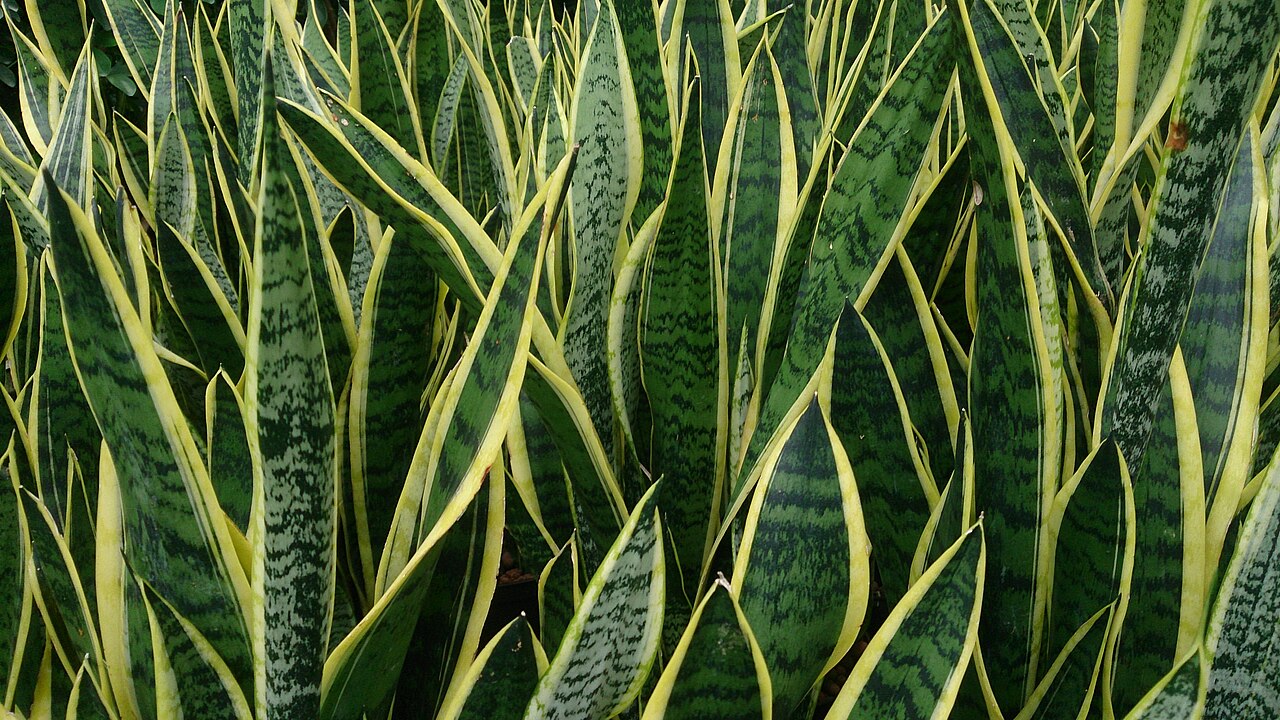
The snake plant — botanically Dracaena trifasciata, and still sold under its old name Sansevieria — is the plant I hand to anyone convinced they have a black thumb. It's a stiff-leaved evergreen succulent from tropical West Africa, and it survives the things that kill other houseplants: low light, forgotten waterings, dry winter air. The most common variety throws upright, sword-shaped leaves banded in dark and pale green, often with a yellow margin on the 'Laurentii' cultivar.
Outdoors it's only hardy in roughly USDA zones 9 through 11 — anywhere it freezes, it's a houseplant, which is how nearly everyone grows it. The leaves can run 28 to 35 inches long, and a happy clump fills its pot with fleshy rhizomes that slowly push out new shoots. 'Slowly' is the operative word: this is not a fast grower, and that's part of why it's so forgiving.
It shines in the spots where nothing else will live: a north-facing hall, a dim corner of a bedroom, an office with one small window. It also pairs naturally with other tough houseplants — see my notes on other forgiving low-light options if you're filling a dark room.
Care guide
How to Care for a Snake Plant
Light: it tolerates low light but it doesn't love it. The ones I keep in bright, indirect light grow noticeably better and keep their variegation; the ones in dim corners survive but barely change year to year. A little direct morning sun is fine. Harsh afternoon sun through glass can scorch the leaves, so I keep it back from a hot south window.
Water is where people kill it — by being kind. Snake plants store water in their leaves and rot in wet soil. I let the soil dry out completely, then water deeply, then leave it alone. In summer that's maybe every two to three weeks; in winter I might water once a month or less. When in doubt, don't. A leaf that's gone soft, mushy, or translucent at the base means too much water, not too little.
It wants ordinary room temperatures, 70 to 90°F is ideal, and growth slows below about 55°F. It needs no extra humidity. Feeding is almost an afterthought: I give a diluted, balanced houseplant fertilizer once or twice over the growing season and skip it entirely in winter. There's no pruning beyond cutting out the occasional damaged leaf at the soil line. Repot only when the rhizomes are visibly straining the pot — every few years at most.
Propagation
How to Propagate a Snake Plant
There are two reliable routes. Division is the fastest and the one I default to, because the new plant looks like a real plant immediately. Leaf cuttings work too, but they're slow and they have one big catch worth knowing.
Division (the easy way)
Slide the whole plant out of its pot at repotting time and brush the soil off the roots.
Find the fleshy rhizomes and the offsets (pups) coming off them. Cut a clump free with a clean, sharp knife, making sure each piece has roots and at least a few leaves.
Pot each division into fast-draining mix, water once lightly, and keep it on the dry side while it settles.
Leaf cuttings (slow, with a catch)
Cut a healthy leaf into a few sections, let the cut ends callus for a day or two, then set them upright (right way up — they won't root if inverted) in water or barely-damp mix. Roots and eventually a pup will form over weeks to months. The catch: variegated types like 'Laurentii' lose their yellow edge from leaf cuttings and come back plain green. If you want the variegation, divide instead.
Troubleshooting
Common Problems and Organic Fixes
Root rot from overwatering is the number-one killer, no contest. Soft, yellowing, mushy leaves and a sour smell from the pot mean the roots are rotting. Unpot it, cut away every soft root and leaf, let it dry, and repot into dry, gritty mix. Then water far less than you think you should. If the whole base is gone, salvage a firm leaf section as a cutting and start over.
For pests, the usual suspects are mealybugs (white cottony specks in the leaf crevices) and spider mites in dry air. I wipe mealybugs off with a cotton swab dipped in diluted rubbing alcohol, and for either pest I follow up with insecticidal soap or neem on the leaves — both keep it organic and are safe to use indoors with good ventilation.
Drooping, splaying leaves: usually too little light or too much water. Move it brighter and let it dry out.
Brown, crispy leaf tips: often from cold drafts or, occasionally, fluoride in tap water. Move it off the windowsill in winter; try filtered or rainwater.
Wrinkled, thin leaves: this one actually is thirst. Give it a deep drink.
If you only remember one thing about snake plant care: water it less. Almost every problem I'm asked about traces back to kindness with the watering can.