
Spider Plants
The forgiving, cat-safe houseplant that throws baby plantlets on long arching stems — propagation built right in.
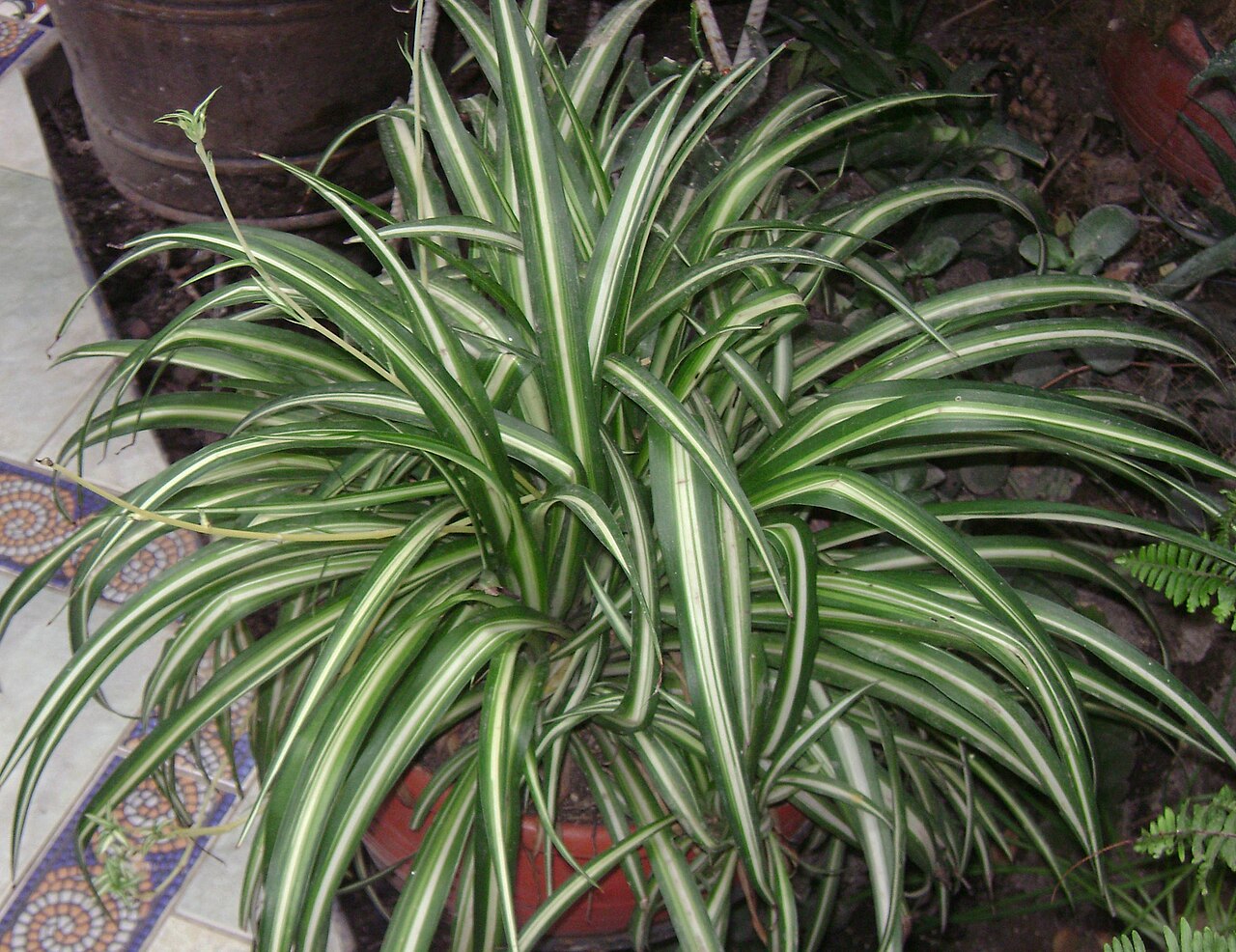
The spider plant, Chlorophytum comosum, is the plant I hand to anyone convinced they kill everything. It is a tough, fast clump of arching strappy leaves native to coastal southern Africa, grown indoors across the country and outdoors as a tender perennial only in the warmest zones (roughly USDA 9 to 11). What makes it special is what it does on its own: it sends out long wiry stems tipped with miniature baby plants — 'spiderettes' — that dangle like a mobile and root the moment they touch soil.
The single most important fact for a lot of households: spider plants are non-toxic and listed as safe for cats and dogs by the ASPCA. The saponins in the leaves may cause mild stomach upset if a cat gorges on them, and cats are oddly drawn to batting and nibbling the dangling pups, but there is no real toxicity. That alone earns it a spot in homes where pothos and lilies can't go.
The most common variety is 'Vittatum', with a creamy-white center stripe, and 'Variegatum', edged in white. For a tidy, compact, curly habit there's 'Bonnie'. All of them grow fast in bright, indirect light and reward neglect more than fuss.
What I appreciate about it as a teaching plant is how visibly it tells you what it needs. The leaves pale in too much sun, brown at the tips when the water is hard, and stop throwing pups when light is too low — every problem has an obvious cause and an easy fix. There's no mystery to keeping one alive, which is exactly why it's the plant I start kids and nervous beginners on. Hang one in a bright bathroom or kitchen window and within a season you'll have a curtain of dangling spiderettes you can pot up and give away.
Care guide
Spider Plant Care
Give it bright, indirect light. It tolerates lower light, but the variegation fades and growth slows; direct midday sun scorches the leaf tips. Water when the top inch or two of soil dries, then let it drain fully — it stores water in thick tuberous roots and far prefers a slight dry-out to staying soggy. A standard well-draining potting mix is all it asks.
Light: bright, indirect; tolerates moderate shade but loses its stripe.
Water: moderate — let the top inch dry between waterings; reduce in winter.
Feeding: a dilute balanced organic feed monthly in spring and summer; none in winter.
They like to be a touch potbound — that crowding actually encourages them to throw more plantlets — so repot only every couple of years, or when the tuberous roots heave the soil up out of the pot. They thrive in a hanging basket where the spiderettes can cascade.
Propagation
Propagating the Plantlets
No plant is easier to multiply, because it does most of the work for you. The plantlets that form on the runners are baby plants ready to root:
Choose a plantlet that already shows small nub roots at its base.
Snip it from the runner and either set it base-down in a small pot of moist mix, or rest it in a shallow dish of water until roots lengthen.
If rooting in water, pot it up once roots reach an inch or two so it doesn't get water-weak.
Keep the new plant bright and lightly moist while it establishes — it takes off within weeks.
You can also divide an overgrown clump at repotting: tip it out, pull the crown into sections each with roots and leaves, and pot them separately. Either way you'll have more spider plants than you know what to do with.
Troubleshooting
Troubleshooting
Brown leaf tips: fluoride, chlorine, and salt buildup from tap water or over-fertilizing. Switch to filtered or rainwater and flush the soil.
Pale, washed-out leaves: too much direct sun. Move to bright, indirect light.
No plantlets: usually too little light or a too-young plant. Give it brighter indirect light; mature, slightly potbound plants spider best.
Mushy base or yellowing: overwatering and root rot. Let it dry out more between waterings and check that the pot drains freely.
If you're filling a home with genuinely pet-safe greenery, the spider plant pairs well with other forgiving, low-light options — see our roundup of low-light houseplants for more easy companions.
Common Questions
Are spider plants toxic to cats?
No — spider plants are non-toxic and listed by the ASPCA as safe for both cats and dogs. They contain saponins that can cause mild stomach upset if a cat eats a lot, and cats are oddly attracted to nibbling the dangling plantlets, but there's no genuine poisoning risk. That makes it one of the few trailing houseplants you can keep around pets without worry.
Why does my spider plant have brown tips?
Brown leaf tips are almost always a water-quality issue — fluoride, chlorine, and salts in tap water accumulate in the leaves, as does excess fertilizer. Water with filtered or collected rainwater, flush the pot occasionally to leach out salts, and ease off the feeding. New growth will come in clean.
How do I get my spider plant to make babies?
Spiderettes form most readily on mature, slightly potbound plants in bright, indirect light. If yours isn't producing runners, give it more light and resist the urge to repot into a larger container — that bit of root crowding is what triggers the plant to send out plantlets.