
Lambs Ear Plant
The soft, silver, pettable groundcover that thrives on neglect — drought-tolerant, deer-resistant, and grown for its felted foliage more than its flowers.
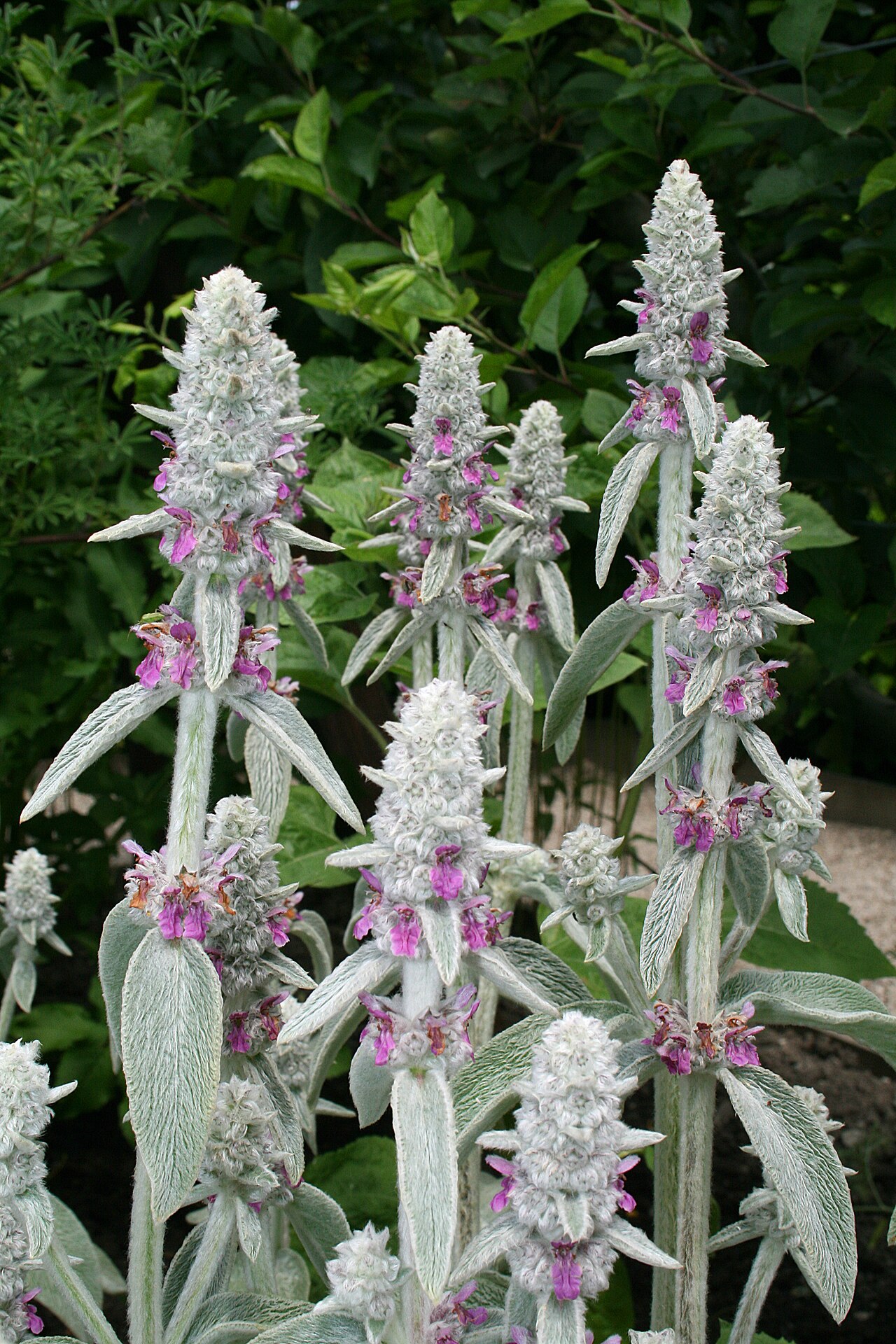
Lamb's ear, Stachys byzantina, is the plant every child in my garden reaches for first — the leaves are silver-green, thick, and covered in soft white hairs that feel exactly like an animal's ear. It's a low, spreading perennial grown almost entirely for that felted foliage. It does send up tall flower stalks of small purple blooms in late spring to early summer, but the flowers are an afterthought; some gardeners shear them off to keep the focus on the leaves and the mat tidy.
It's hardy in roughly USDA zones 4 to 8, native to the rocky hills of Turkey, the Caucasus, and Iran — which tells you everything about what it wants: sun, sharp drainage, and not much fuss. A clump stays 4 to 18 inches tall and spreads 12 to 36 inches wide depending on the cultivar, knitting into a soft silver carpet over a season or two.
It shines as a soft front-of-border edger, a foil for hot colors, or a drought-tolerant groundcover on a dry bank. The silver foliage cools down a bed of reds and oranges beautifully, and it's reliably deer- and rabbit-resistant — they don't like the fuzz. If you're filling a hot, lean, sunny strip, it belongs on the shortlist with other drought-tolerant choices.
Care guide
Growing and Caring for Lamb's Ear
Give it full sun — at least six hours — though in hot-summer climates a little afternoon shade keeps the foliage from scorching. The non-negotiable is drainage. Lamb's ear evolved on rocky hillsides and will rot in heavy, wet ground, so in my clay I plant it on a slight mound or amend the hole with grit.
Water is genuinely low once it's established. The first season I water regularly to settle the roots; after that I give it about an inch a week only during dry spells and otherwise leave it. The single most important watering rule is technique:
It needs essentially no fertilizer; rich feeding just makes it floppy and rot-prone. Maintenance is a matter of grooming: in spring I pull out the matted, blackened leaves left from winter, and through the season I remove any leaf that's gone brown or slimy to keep air moving. If you don't care for the flower spikes, cut them at the base. Every three or four years the center of the clump tends to die out, which is your cue to divide and replant the healthy outer growth.
Propagation
How to Propagate Lamb's Ear
Division is the simplest, fastest, and most reliable way — and you'll want to do it every few years anyway to keep the clump healthy. Seed works too, but it's slower.
Division
Divide in early spring, just as new growth starts. Lift the whole clump with a fork.
Pull or cut it into sections, discarding any dead center, and keeping pieces that have both roots and healthy leaves.
Replant the divisions in well-drained soil, spacing them about 12 to 18 inches apart, and water in. They knit together quickly.
Rooted runners are even easier: the spreading stems often root where they touch soil, so you can snip a rooted piece and pot it up. From seed, sow on the surface of moist mix (it needs light to germinate) and be patient through a slow start. Established plants frequently self-sow, so once you have one, you tend to have more.
Troubleshooting
Common Problems and Organic Fixes
Nearly every problem with lamb's ear is moisture-related, and nearly all of it is preventable. The plant hates wet feet and wet leaves.
Rotting, blackened, mushy centers: too much water, poor drainage, or humid weather. Cut out the affected leaves, improve airflow by thinning, and water only at the base.
Powdery mildew (a dusty white film): the classic result of overhead watering or crowding. Remove affected foliage, space plants for air movement, and keep leaves dry.
Bare, dead middle of the clump: natural after a few years. Lift and divide, replanting the vigorous outer pieces.
Pests are rarely an issue — the fuzzy leaves put off deer, rabbits, and most insects. In very humid summers, slugs can shelter in the dense mat; I thin the planting for airflow and, if needed, hand-pick or use iron-phosphate slug bait, which is organic-approved.