
Ideas for Raised Bed
Layout, planting, and vertical ideas I've actually run in my own raised beds — square-foot grids, trellis placement, succession swaps, and the soil mix underneath it all.
The best raised-bed ideas all start with reach and light: keep beds 4 ft wide or less so you never step in them, run paths 3–4 ft for a wheelbarrow, and put trellises on the north side so tall crops don't shade short ones. Inside the bed, a square-foot grid lets you plant intensively for more yield; succession planting refills gaps as spring crops finish; and a deep, compost-rich fill is what makes any of it work. Below are the layout, vertical, and planting ideas I've tested in my own beds.
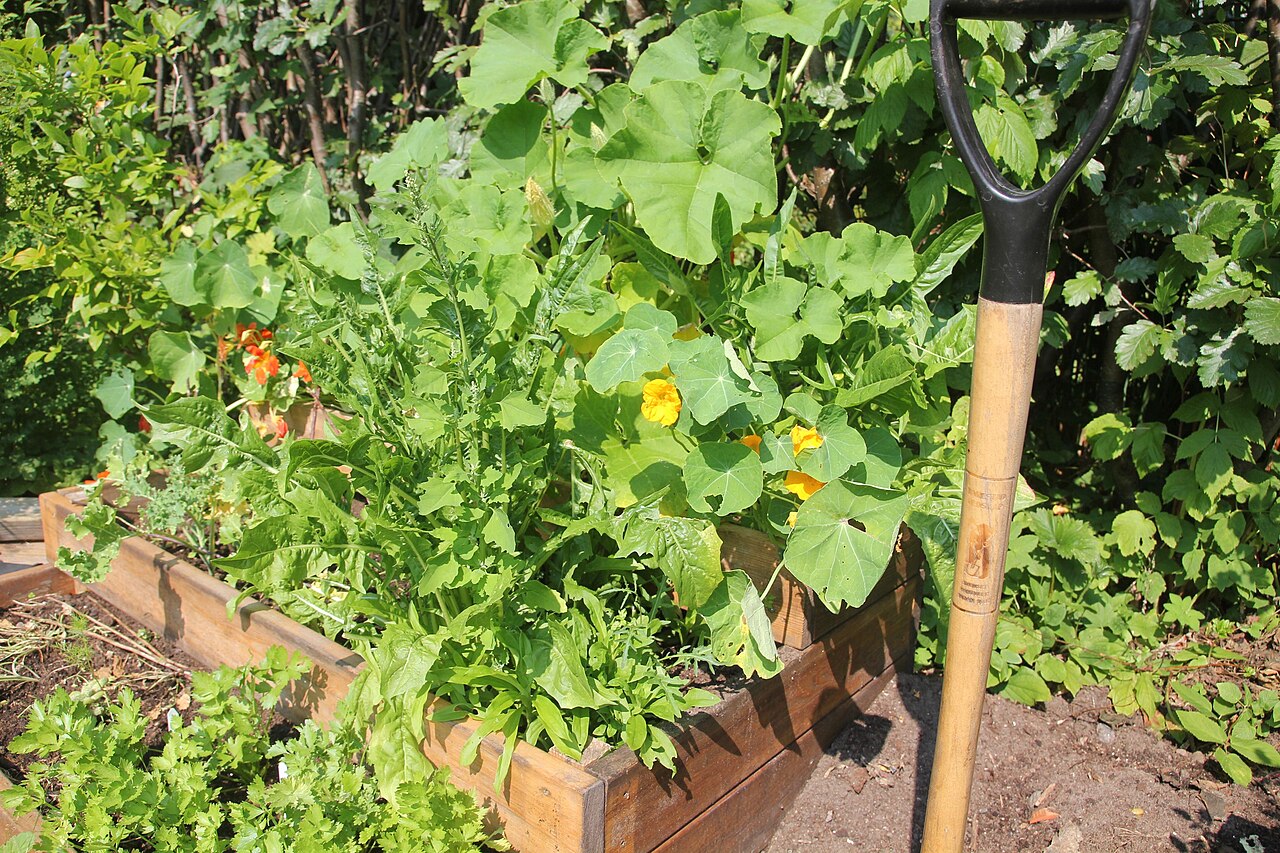
Get the layout right first
Every good raised-bed idea I've tested fails if the bed is the wrong shape, so this is where I start. Keep beds 4 ft wide or less when you can reach from both sides, and 2 ft or less if the bed sits against a wall or fence where you can only reach from one. The rule is simple: you should never have to step into the bed to tend it, because compacting the soil undoes the whole reason you built up.
Hold length to about 8–10 ft so you're not walking the long way around constantly, and leave 3–4 ft paths between beds — wide enough for a wheelbarrow, a hose, and plants that flop over the edge by midsummer. Orient the long axis to run the bed's tallest plants along the north side, which sets up the light-management ideas below. Get these numbers right and everything else is just planting.
Plant intensively with a square-foot grid
The single idea that changed my yields most was abandoning rows. In a raised bed you've already built ideal soil, so there's no reason to waste half of it on walking paths between rows. I divide each bed into a 1 ft × 1 ft grid — Mel Bartholomew's square-foot method — and plant each square by mature size: one tomato or pepper per square, 4 lettuces, 9 bush beans, 16 carrots or radishes. The plants knit together, shade out weeds, and a 4×4 bed produces far more than the same footprint in rows.
1 per square: tomato, pepper, eggplant, broccoli, a single caged determinate.
4 per square: leaf lettuce, Swiss chard, marigolds, basil.
9 per square: bush beans, spinach, beets.
16 per square: carrots, radishes, onions.
Tuck companion flowers into the grid too — a square of marigolds or a few nasturtiums at the corners earns its keep by pulling in pollinators and confusing pests, and it's a more organic line of defense than reaching for a spray.
Build up with trellises and verticals
Going vertical is how a small raised bed grows big crops. Cucumbers, pole beans, peas, small melons, and indeterminate tomatoes all want to climb, and lifting them off the soil keeps fruit clean and airflow good, which cuts disease. The placement that matters: put the trellis on the north side of the bed so the climbing wall of foliage doesn't cast shade over your sun-loving shorter crops. Tuck the compact growers — lettuce, herbs, bush beans — on the sunny south side in front.
Train vines early and often. I tie or weave new growth onto the trellis weekly through the first month; left alone, vines tangle into each other and you spend July untangling instead of harvesting. In genuinely hot regions there's a useful exception — a trellis on the south side can deliberately filter midday sun onto tender greens behind it, turning the shade into a feature rather than a problem.
Keep beds full with succession planting
An empty square is a wasted square. Succession planting is the idea that keeps a raised bed producing from the last frost to the first: as a spring crop finishes, you replant the gap immediately rather than letting it sit. When my spring peas come out in early summer, that real estate goes straight to a heat crop — bush beans or a late-summer sowing of carrots — and the cool-season greens like kale and Swiss chard go back in for a fall harvest when the heat breaks.
I keep a few cell-trays of seedlings coming along on the side so I always have a replacement ready the day a square opens up. Stagger fast crops too — sow a square of lettuce or radishes every two weeks instead of all at once, and you harvest steadily instead of drowning in salad for one week and having none the next. A raised bed's rich soil can carry this intensity; a row garden in poor ground usually can't.
The soil mix that makes it all work
None of the ideas above matter if the fill is wrong, because intensive planting only works in soil that can feed it. I want 12–24 in of usable depth — root crops and tomatoes at the deep end — and a loose, moisture-retentive blend rather than straight bagged garden soil, which packs hard. A proven mix is roughly equal parts quality compost and topsoil, with coconut coir or peat for water-holding and a handful of vermiculite or perlite per square foot for drainage. That texture is what lets roots run and water move without pooling.
Raised bed ideas FAQ
How wide should a raised bed be?
Four feet wide or less if you can reach it from both sides, and 2 feet or less if it's against a wall or fence and reachable from only one side. The goal is to tend the whole bed without stepping into it, since compacting the soil defeats the purpose of a raised bed.
What can I plant together in one raised bed?
Group plants by sun height and season. Put tall climbers (tomatoes, beans, cucumbers) on the north side, shorter crops in front, and tuck companion flowers like marigolds and nasturtiums through the bed for pollinators and pest control. Pair compatible crops — basil and tomatoes, carrots and onions — and keep heavy feeders rotating to a new bed each year.
Where should the trellis go in a raised bed?
On the north side, so the wall of climbing foliage doesn't shade your shorter sun-loving crops. The exception is very hot climates, where a south-side trellis can be used on purpose to filter harsh midday sun onto tender greens planted behind it.