
Eastern Redbud Tree: Lunaire's Field-Tested Picks
The straight species and the redbuds I'd actually plant beside it — sorted by foliage, flower color, and the size that fits a real yard.
Eastern redbud (Cercis canadensis) is a small native understory tree hardy roughly zones 4–9 that flowers magenta-pink along bare branches in early spring, before the leaves. The straight species reaches about 20–30 ft and is the most cold-hardy choice. For colored foliage go to 'Forest Pansy'; for a tight spot use the weeping 'Ruby Falls' or 'Lavender Twist'; for the brightest bloom, 'Appalachian Red'. Every one is best in part shade with afternoon protection in my clay.
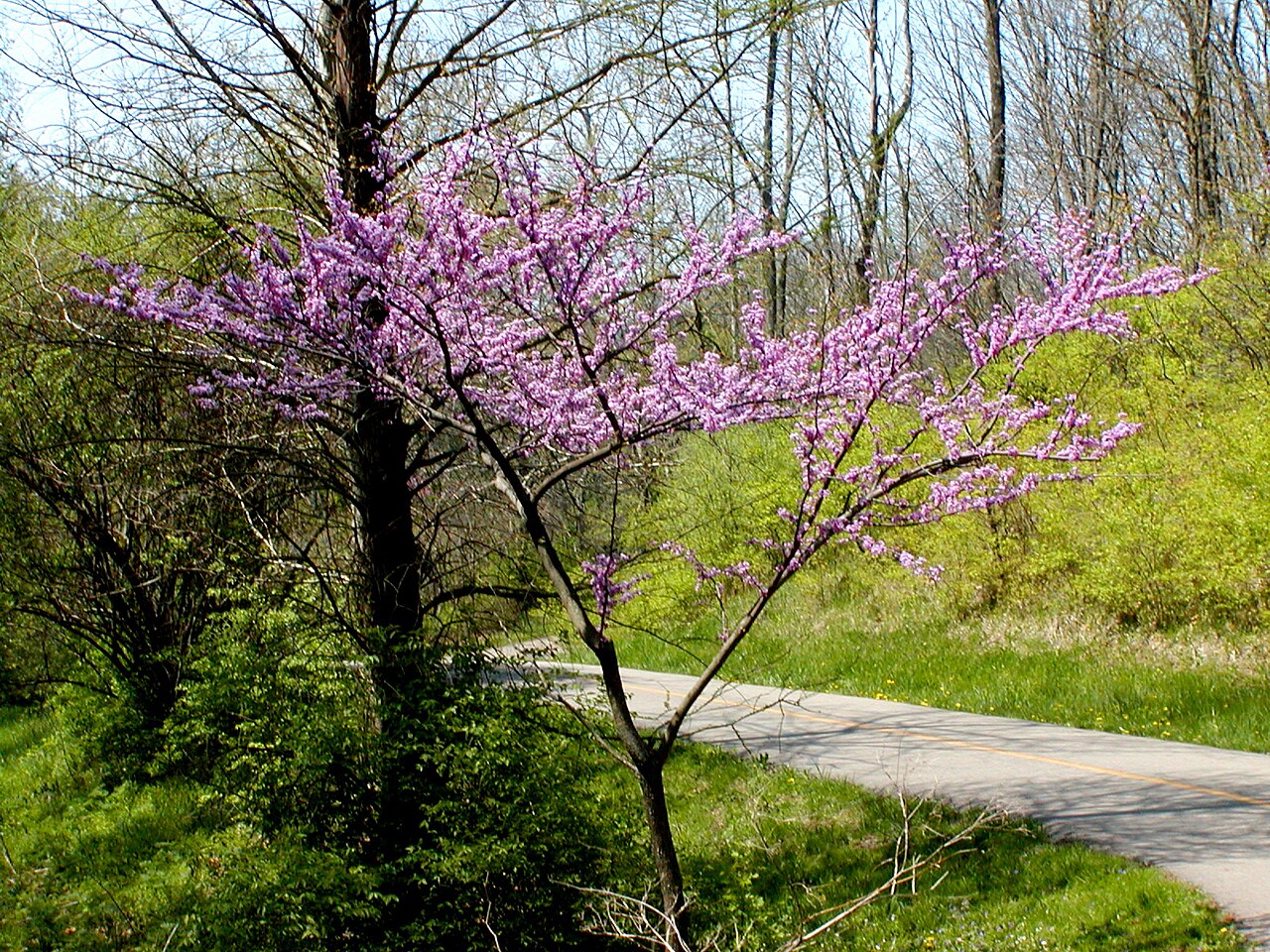
I have an eastern redbud in zone 7b clay that I planted off the back corner of the house, and for two weeks every April it is the best thing in the garden — the flowers come straight out of the bark before a single leaf opens. What most people search for as "eastern redbud tree" is really a small family of options: the wild species and a run of cultivars that change the leaf color, the flower color, or the habit. Below are the redbuds I've grown or planted for other people, plus two regional cousins worth knowing, with the cultivar I'd actually pick in each case.
How we chose
Zones and mature sizes here are cross-checked against extension sources (NC State, Morton Arboretum, university nurseries), not nursery marketing. I've ranked toward trees I've seen leaf out and survive a wet clay winter; where I'm reporting on a cultivar I haven't personally grown, I say so. Redbud is short-lived as trees go — often 20–30 years — so I weight cultivars that hold their color and habit honestly rather than the flashiest tag at the garden center.
1. Eastern Redbud (Cercis canadensis)
Zones 4–9 · Part shade to full sun · Magenta-pink bloom early spring, 20–30 ft
This is the one I planted and the one I'd start with. The straight species is the most cold-hardy redbud and a true U.S. native understory tree, so it reads naturally at a woodland edge. Heart-shaped leaves follow the flowers and turn soft yellow in fall. In my clay it wanted afternoon shade its first two summers; once established it's tough. Buy a local or northern-grown seed source if you're in a cold zone — provenance matters more here than the label.
2. 'Forest Pansy' Redbud (Cercis canadensis 'Forest Pansy')
Zones 5–9 · Part shade · Purple-pink bloom, reddish-purple foliage, 20–25 ft
The classic colored-leaf redbud. New foliage emerges vivid reddish-purple, deepens to a muted purple, then can fade toward green in real summer heat — the further south you are, the more it greens. I give it afternoon shade specifically to hold the leaf color longer. Upright form, slightly later and darker bloom than the species. If you only want one redbud and you want it to do something after the flowers drop, this is it.