
Blue Mist Flower: Lunaire's Field-Tested Picks
Two very different plants share this name — the native mistflower and the shrubby bluebeard — and here are the cultivars of each I'd actually plant.
“Blue mist flower” is shared by two unrelated plants.
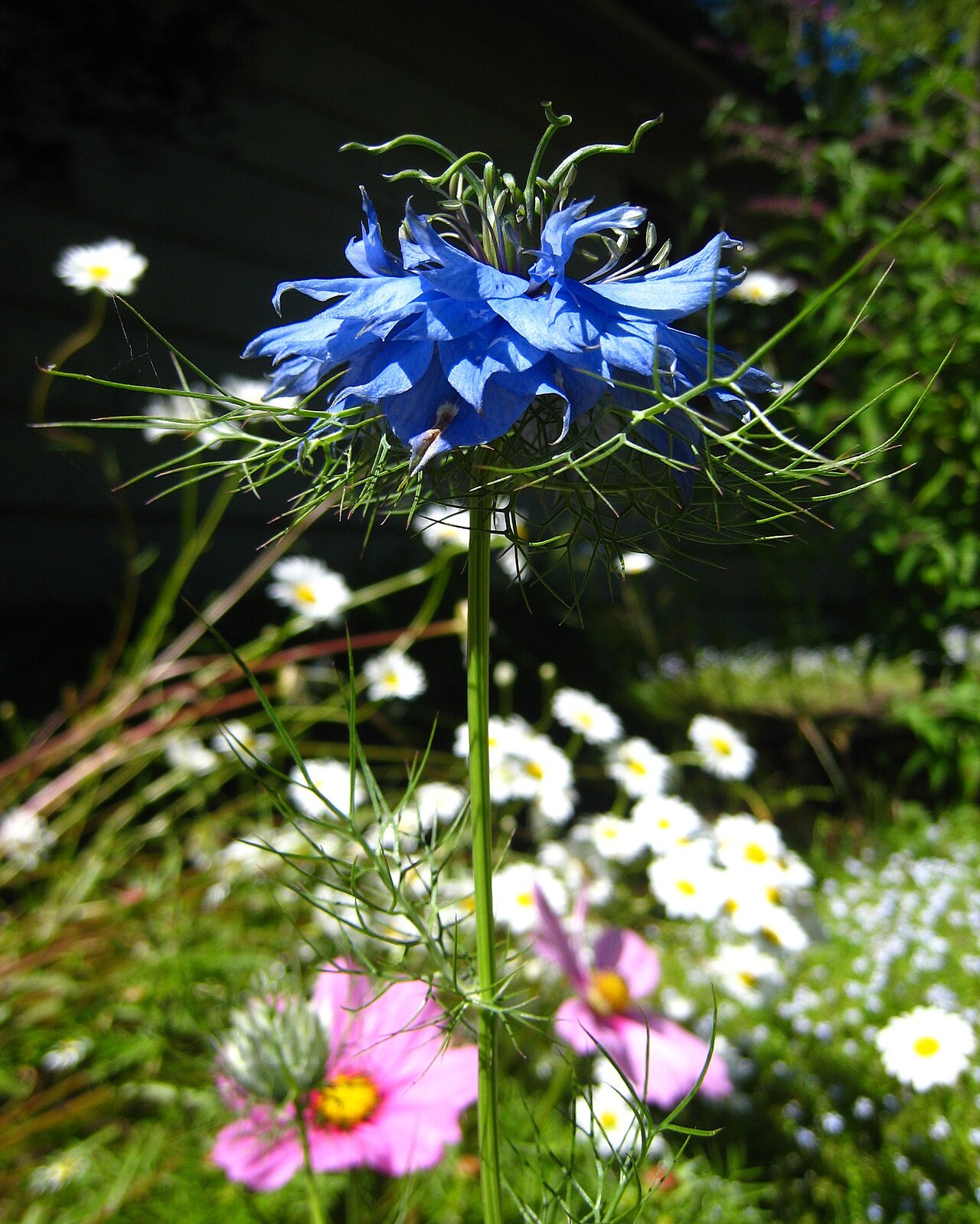
Two very different plants share this name — the native mistflower and the shrubby bluebeard — and here are the cultivars of each I'd actually plant.
“Blue mist flower” is shared by two unrelated plants.

I get more confused questions about “blue mist flower” than almost any plant name, and it's because two genuinely different garden plants wear it. One is a soft, spreading native perennial — Conoclinium coelestinum, the hardy ageratum — that hums with skippers and small bees from July into October. The other is Caryopteris, a tidy woody shrub also sold as bluebeard or blue spirea, that earns its keep in dry, sunny borders.
They want opposite conditions, which is exactly why it matters to know which one you're buying. The native loves moisture and will colonize; the shrub wants sharp drainage and stays put. I grow both here in zone 7b — the Conoclinium in a low damp corner where its wandering is welcome, the Caryopteris in a baked gravel bed. Below, I've split the picks so you can find the right plant for your spot.
Every plant here has spent at least two seasons in my zone 7b clay, or in a friend's nearby sand. I judged the Conoclinium types on how true the blue runs, how much pollinator traffic they pull in fall, and how aggressively they spread — because that last one is a feature in a rain garden and a headache in a tidy border. The Caryopteris cultivars I rated on cold hardiness (some die back to the ground in zones 5–6 and resprout), drought tolerance, and how reliably they bloom on new growth after a hard prune. No sprays, no coddling — if a plant needed babying to look decent, it didn't make the cut.
Zones 5–10 · Part shade to sun · Blooms July–October, 1–2 ft
The straight native species and the one most people mean. Conoclinium coelestinum throws fluffy blue-purple heads on downy purplish stems from midsummer into fall, exactly when pollinators need late nectar. It spreads by rhizome and seed into a dense groundcover, so I site it where that's an asset. Happiest in part shade with steady moisture, but it'll take full sun if the soil stays damp.
Zones 5–10 · Part sun · Blooms late summer–fall, 1–3 ft
If you have a low wet meadow edge, let the species naturalize as a colony rather than treating it as a single specimen. In my damp corner a planted drift of Conoclinium filled in to a knee-high blue haze in two years — outstanding in a rain garden, and the monarchs work it hard during fall migration. Cut it back in spring; it returns reliably.
Zones 7–10 · Full sun · Blooms spring–fall, 1–2 ft
The Southwest cousin, Conoclinium greggii, takes more heat and drought than the eastern native and has finer, more dissected foliage. It is famous as a queen and monarch butterfly magnet in warmer zones. Less cold-hardy, so I'd only push it to zone 7 with a sheltered spot and good drainage.
Zones 5–9 · Full sun · Blooms late summer–fall, 2–3 ft
The deepest-blue bluebeard I grow. 'Dark Knight' carries clusters of rich purple-blue flowers on fragrant gray-green foliage, blooming on new wood right when most of the border is winding down. In zones 5–6 it dies back to the ground in winter and resprouts; I cut it hard in spring either way to keep it dense.
Zones 5–9 · Full sun · Blooms late summer, 3–4 ft
A taller, more open bluebeard with sky-blue flowers and especially silvery foliage. 'Longwood Blue' is the one I reach for when I want a hazy lavender-blue cloud at the back of a dry border. Bees cover it. Like all the lavandin-loving shrubs here, it wants sharp drainage and resents wet feet.
Zones 5–9 · Full sun · Blooms late summer, 2–3 ft
Chartreuse foliage is the draw — 'Worcester Gold' pairs gold leaves with lavender-blue flowers for a contrast that lights up a dim part of the border. The gold can scorch in brutal afternoon sun, so I give it a little relief at the hottest part of my zone 7b day. Otherwise as tough as the rest.
Zones 5–9 · Full sun · Blooms late summer, 2–3 ft
A compact, dense old standard with deep blue flowers. 'Heavenly Blue' is more upright and tidy than 'Longwood Blue', which makes it a good middle-of-the-border choice. Reliable, fragrant, and a steady late-season nectar source — nothing flashy, just dependable.
Zones 5–9 · Full sun · Blooms late summer–fall, 2–3 ft
An improved gold-leaf type that holds its color better than 'Worcester Gold' and resists scorch a bit more. 'Sunshine Blue II' gives the same lavender-blue flowers over bright foliage on a rounded shrub. My go-to gold bluebeard now that I've trialed both side by side.
Zones 5–9 · Full sun · Blooms late summer–fall, 2–3 ft
Glossy near-black foliage sets this newer selection apart. 'Beyond Midnight' has darker, shinier leaves than the older cultivars and cobalt-blue flowers that pop against them. Stays compact and full without much pruning — the most ornamental bluebeard out of bloom, in my view.
Zones 5–9 · Full sun · Blooms late summer–fall, 2–3 ft
Dark green foliage and deep blue flowers on a vigorous, well-branched plant. 'Grand Bleu' blooms a touch later for me, which extends the bluebeard season into early fall when the asters take over. A solid, saturated blue without the gold-leaf drama.
Zones 5–9 · Full sun · Blooms late summer, 2–3 ft
Compact and dark-budded, 'First Choice' opens deep cobalt flowers from near-black buds for a two-tone effect. It stays neat without shearing, which makes it my pick for a small dry bed or a sunny container where space is limited.
Zones 5–9 · Full sun · Blooms late summer–fall, 2–3 ft
A dense, rounded dwarf-ish bluebeard with rich blue flowers and dark green leaves. 'Petit Bleu' holds a tight habit on its own, so I use it as a low repeating accent down a hot, gravelly path where the native mistflower would never survive.
When in doubt, let the site decide. A moist, partly shaded corner where you want a native that feeds fall pollinators calls for Conoclinium; just plan for it to roam. A dry, baked, full-sun bed wants Caryopteris, which stays where you put it and asks for almost nothing. Both bloom in that valuable late-summer window, so either way you're adding blue when the garden needs it most. For more late-season blue to plant alongside, see my list of blue flowers.