
Milkweed: The Only Plant Monarch Caterpillars Eat
Three milkweeds for three sites: dry-sun (butterfly weed), average (common), and wet (swamp). Plant any of them and the monarchs will find you.
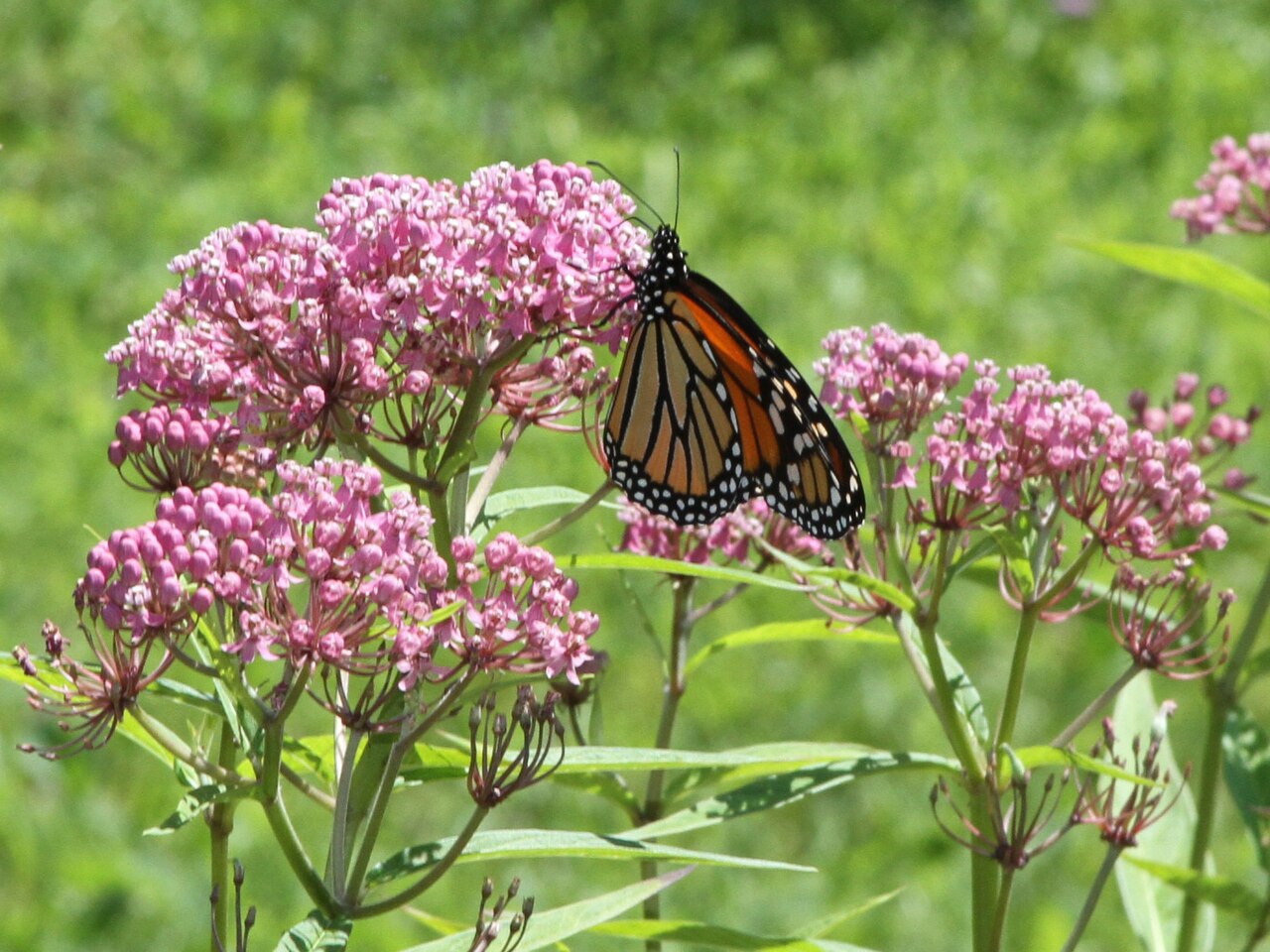
Milkweed is the plant the monarchs cannot live without — their caterpillars eat only Asclepias leaves. Plant any species native to your region and the monarchs will find you, often the same season. North America has more than 70 species; three of them belong in most home gardens.
Common milkweed (A. syriaca) is the roadside species — six feet tall, pink umbel flowers, rhizomatous. Butterfly weed (A. tuberosa) is the manicured-garden alternative — orange flowers, taproot, well-behaved. Swamp milkweed (A. incarnata) is for the wet spot — pink, clumping, no roaming.
Care guide
Care guide
All three want full sun. Butterfly weed wants lean, well-drained soil — over-amending the bed makes it leggy and short-lived. Swamp milkweed accepts wet feet; common milkweed accepts anything. None of them need fertilizer; none of them need to be watered after year one.
What NOT to plant
Tropical milkweed (A. curassavica) is sold widely but causes problems in monarch-overwintering range — it does not die back, and a parasite called OE builds up on the leaves. Stick to natives for your region. In the southern US, cut tropical milkweed to the ground in October if you must grow it.
Propagation
Propagation
Seed is easiest. Cold-stratify for 30 days in moist sand in the fridge, then surface-sow in spring. Butterfly weed resents division — its taproot does not transplant. Common and swamp milkweed divide cleanly in spring.
Troubleshooting
Caterpillars eating it
The leaves disappearing is the goal, not the problem. A mature plant can feed several monarch caterpillars to chrysalis and recover the same season. Do not spray. The aphid colonies (oleander aphids, yellow) look alarming but are normal — predators clear them within weeks; spraying kills the monarchs you planted for.