
How to Grow Tomatoes in Pots
How I actually grow a full crop of tomatoes in containers on a hot clay-country patio — pot size, the varieties that don't sulk, and the watering rhythm that prevents blossom end rot.
To grow tomatoes in pots, use a minimum 5-gallon container — but 10 to 15 gallons yields far better — filled with a quality potting mix, not garden soil. Pick a compact determinate or dwarf variety such as 'Bush Early Girl', 'Patio', or 'Tiny Tim' rather than a full-size indeterminate that will spend the season root-bound. Set the cage or stake in at planting, water deeply and consistently (often daily in summer heat), and feed with a liquid tomato fertilizer every week or two once flowering starts. In my zone 7b heat, the single thing that decides success is even watering: the wet-dry-wet swing is what causes blossom end rot and cracking, not the pot itself.
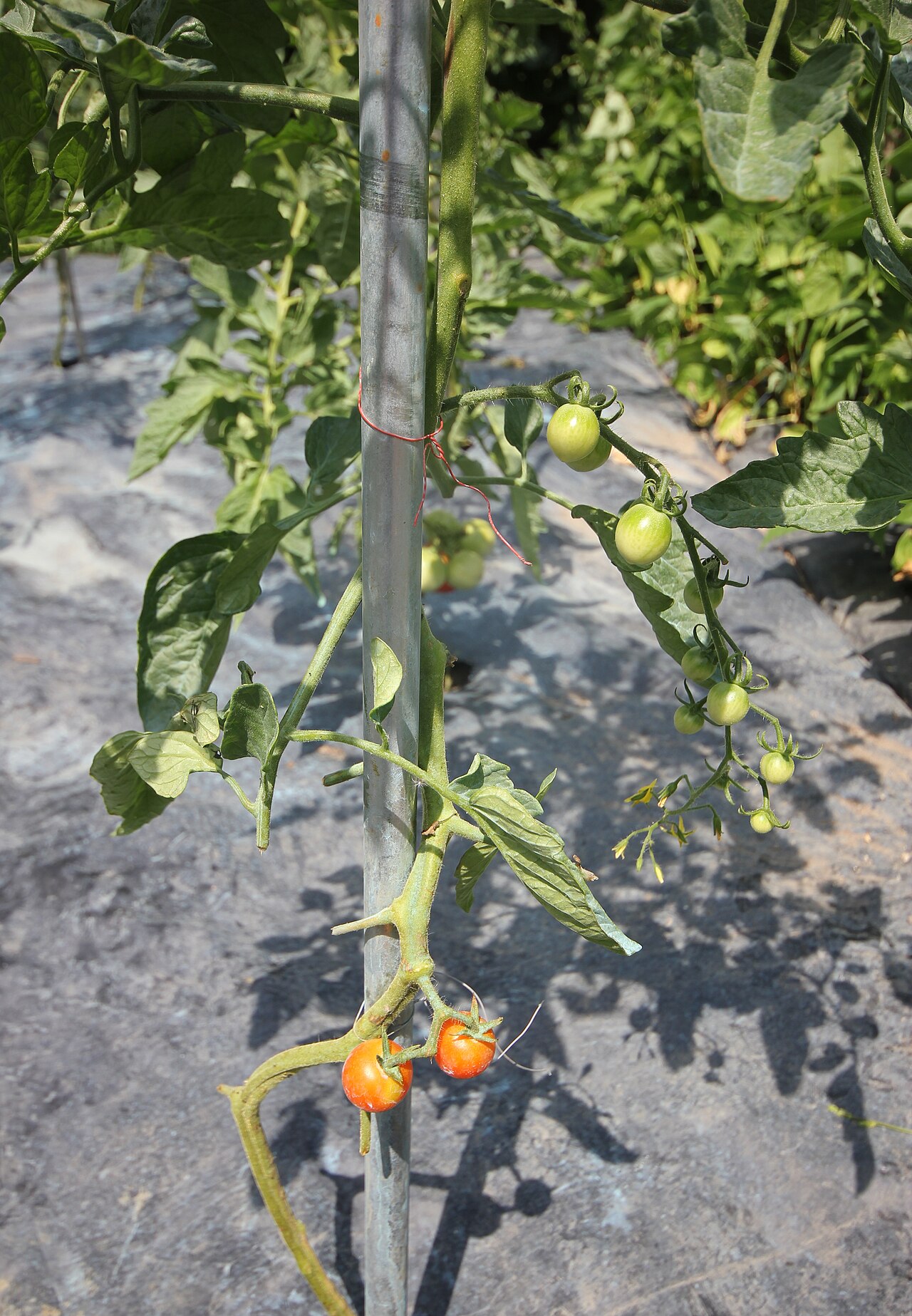
Start with a pot big enough to forgive you
The biggest mistake I see — and made myself early on — is planting tomatoes in a pot that is too small. The absolute minimum is 5 gallons per plant, but if you have the room, 10 to 15 gallons changes the whole experience. A bigger volume of soil holds moisture longer, gives the roots somewhere to go, and forgives the day you forget to water. In a 5-gallon pot in full summer sun, a plant can dry out enough to stress within a single day.
Use a real potting mix, never garden soil or topsoil — that heavy clay I grow in would compact into a brick inside a container and suffocate the roots. Make sure there are drainage holes; tomatoes will not tolerate sitting in water. I run fabric grow bags and large glazed pots interchangeably, and both work as long as the volume is there.
Choose a variety bred to stay small
Variety selection is where most container attempts go wrong before they start. A full-size indeterminate — the kind that keeps growing until frost — will technically survive in a 5-gallon pot but spend the whole season root-bound and stressed. For pots I reach for compact determinates and dwarfs that were bred for exactly this.
'Patio' — bred specifically for containers; a dwarf determinate topping out around 2–3 feet with a heavy set of small fruit.
'Bush Early Girl' — a determinate that stays 2–3 feet and ripens fast, around 54 days, which I love for an early patio crop.
'Tumbling Tom' — a trailing cherry type built for hanging baskets and rail planters.
'Tiny Tim' — a true dwarf cherry for the smallest pots and windowsills.
'Celebrity' and 'Better Bush' are slightly larger determinates that still do well in a 10-gallon-plus pot if you want bigger slicing fruit. I will be honest: container tomatoes ask more of you than in-ground ones, and a first-timer is better served by a determinate that quits politely than an indeterminate that demands daily babysitting.
Water like it's your one job
Containers dry out far faster than beds, and tomatoes punish uneven moisture. Check daily in summer: push a finger two inches into the mix, and if it is dry there, water — until it runs from the drainage holes, not just until the surface darkens. Blossom end rot and cracked fruit come from the wet-dry-wet swing, not from the pot. In my zone 7b heat that often means watering every single day in July, sometimes twice.
Feed, support, and place in full sun
Every watering flushes nutrients out the bottom of a pot, so feeding matters more here than in the ground. Once the plant is flowering, I give a liquid tomato fertilizer every one to two weeks; a balanced soluble feed such as 20-20-20 on the same cadence also works. Don't overdo nitrogen or you'll grow a lush green bush with little fruit.
Set the cage or stake into the pot at planting time. Driving a stake into an established root ball later does more harm than the support is worth. And give the pot full sun — six to eight hours minimum. If you are also feeding your container plants, my notes on tomato companion plants carry over: a basil plant tucked at the pot's edge is the one companion that genuinely shares the space.
Planting and the mistakes that cost me a crop
When I set a tomato into its pot, I plant it deep — burying a good third of the stem, stripping the leaves below the soil line first. Tomatoes grow roots all along a buried stem, and that extra rooting is exactly the head start a container plant wants. Fill to within an inch or two of the rim so there's room to water without it sheeting over the edge.
The mistakes that have actually cost me fruit in pots are a short list, and they repeat across every gardener I know who's frustrated with container tomatoes:
Pot too small — the single most common one. A cramped root ball gives you a bonsai tomato that fruits poorly no matter what you feed it.
Wrong variety — a full-size indeterminate jammed in a bucket spends the season stressed and root-bound.
Erratic watering — the wet-dry swing that brings on blossom end rot and split skins.
Garden soil in the pot — it compacts, drains badly, and brings disease in with it.
On pests, I stay organic first: I check the undersides of leaves for hornworms by hand, knock aphids off with a hard spray of water, and tuck a basil plant at the pot's edge for the small but real pest-disrupting effect. Good airflow between pots matters too — set them far enough apart that leaves dry quickly after rain, which keeps the fungal diseases tomatoes are prone to from taking hold in the first place.
Questions I get about container tomatoes
How big does a pot need to be for tomatoes?
Five gallons is the bare minimum for a single plant, and that only works comfortably with a compact determinate or dwarf variety. For larger or indeterminate types, or simply for better yields and less watering stress, step up to 10–15 gallons. Bigger pots hold moisture more evenly, which is the whole game with tomatoes.
How often should I water tomatoes in pots?
Check daily in warm weather. A 5-gallon pot in full sun can dry to a stress point within a day. Water deeply until it drains out the bottom, aiming for consistent moisture rather than a wet-then-bone-dry cycle, which causes blossom end rot and cracking. In peak summer heat I often water once a day and occasionally twice.
Do potted tomatoes need full sun?
Yes. Tomatoes need at least six to eight hours of direct sun to set and ripen a good crop. One advantage of pots is that you can move them to chase the sun on a patio or balcony, or shift them to light afternoon shade during a brutal heat wave to ease blossom drop.