
Amelanchier Plants
A native small tree that hands you white spring flowers, edible June berries, and blazing fall color — the most useful four-season plant I grow on clay.
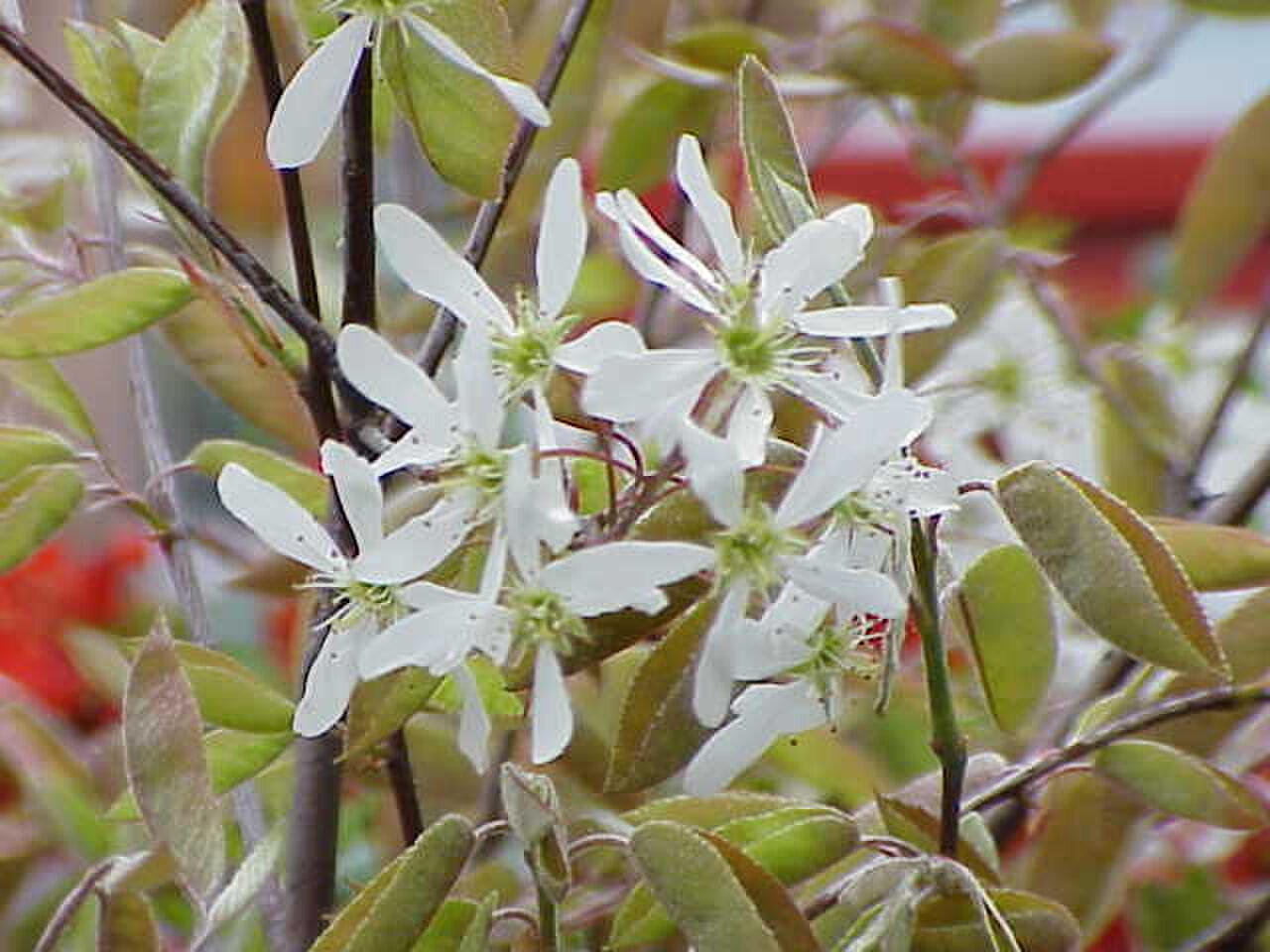
If I could keep only one small tree, it would be an Amelanchier — the serviceberry, also called juneberry, shadbush, or saskatoon depending on where in the country you grew up. It earns its keep in every season: clouds of white flowers in early spring before the dogwoods, sweet edible berries in June, clean green summer foliage, and orange-to-red fall color that rivals anything in the yard. It is a member of the rose family, closely related to apples, which is why the little fruits taste faintly of almond-tinged apple.
It is a genuine North American native — nearly all of the roughly 30 species in the genus are native here — which makes it one of my go-to recommendations for anyone wanting to feed birds and pollinators rather than just decorate. Most serviceberries are reliably hardy across USDA zones 4 through 9, and the tough hybrid 'Autumn Brilliance' stretches that down to zone 3.
You can buy it as a multi-stemmed large shrub or a single-trunk small tree; most species mature around 15 to 25 feet tall. The species I lean on: Amelanchier × grandiflora 'Autumn Brilliance' for dependable fall color and form, Amelanchier laevis (Allegheny serviceberry) for a graceful tree, and Amelanchier alnifolia (saskatoon) if your real goal is fruit.
Care guide
Growing Serviceberry: Light, Soil, Water, and Pruning
Serviceberry is wonderfully adaptable, which is most of why I trust it on my heavy zone 7b clay. It does best in full sun to part shade — full sun gives you the heaviest flowering, the best berry crop, and the most intense fall color, while part shade is tolerated and suits a woodland-edge planting. It handles a range of soils including clay, loam, and sand, as long as the spot is not permanently waterlogged. Mine sits on clay that bakes in summer and it has never complained.
Water is mainly a first-year concern. Keep a new tree consistently moist through its establishing season — deep soaks rather than daily sprinkles — and after that an established serviceberry needs supplemental water only in real drought. Its needs are moderate; it is neither a bog plant nor a true xeric one. I mulch the root zone a couple of inches deep with shredded bark, kept off the trunk, to hold moisture and keep the mower away from the bark.
Feeding is barely necessary. In decent soil with annual compost or leaf mulch I never fertilize an established tree. If yours is in poor ground, a light topdressing of compost in spring is plenty — push it with high-nitrogen feed and you get soft growth that invites disease.
Propagation
How to Propagate Amelanchier
There are three honest routes, and I will tell you up front that named hybrids like 'Autumn Brilliance' do not come true from seed — for those, you propagate vegetatively or buy the grafted plant. Seed is for the straight species.
Seed (species only): clean the pulp off ripe berries, then give the seed several months of cold, moist stratification in the fridge or sown outdoors over winter. Germination is slow and uneven — patience is the whole game.
Suckers and division: suckering species such as saskatoon throw up rooted shoots around the base. Sever a rooted sucker with its own roots in early spring and transplant it — the simplest method by far for a multi-stem clump.
Softwood cuttings: take cuttings of new growth in early summer, dip in rooting hormone, and keep them under humidity. Amelanchier can be stubborn from cuttings, so expect a modest success rate and take more than you need.
For most home gardeners I'd skip the fuss and either dig suckers from a friend's saskatoon or buy a healthy named tree. The propagation effort pays off only if you want a lot of plants.
Troubleshooting
Common Serviceberry Problems and Organic Fixes
Because it sits in the rose family alongside apples and hawthorns, serviceberry shares their fungal troubles, and the big one is cedar-serviceberry rust. If junipers or red cedars grow nearby, you may see orange spots and odd gelatinous growths on leaves and fruit in wet springs. It is rarely fatal and I treat it organically: rake and remove fallen infected leaves, prune to open the canopy for airflow, and — where it is severe — increase the distance from juniper hosts. I do not reach for fungicides on a tree that shrugs the rust off each year.
Powdery mildew: white film on leaves in humid, crowded conditions. Improve airflow with thinning cuts; it is mostly cosmetic.
Fire blight: blackened, shepherd's-crook shoot tips. Prune well below the damage in dry weather, sterilizing the blade between cuts.
Birds eating the berries: not a problem so much as the cost of doing business. Net a branch or two if you want a harvest, or simply plant it for the birds and enjoy the show.