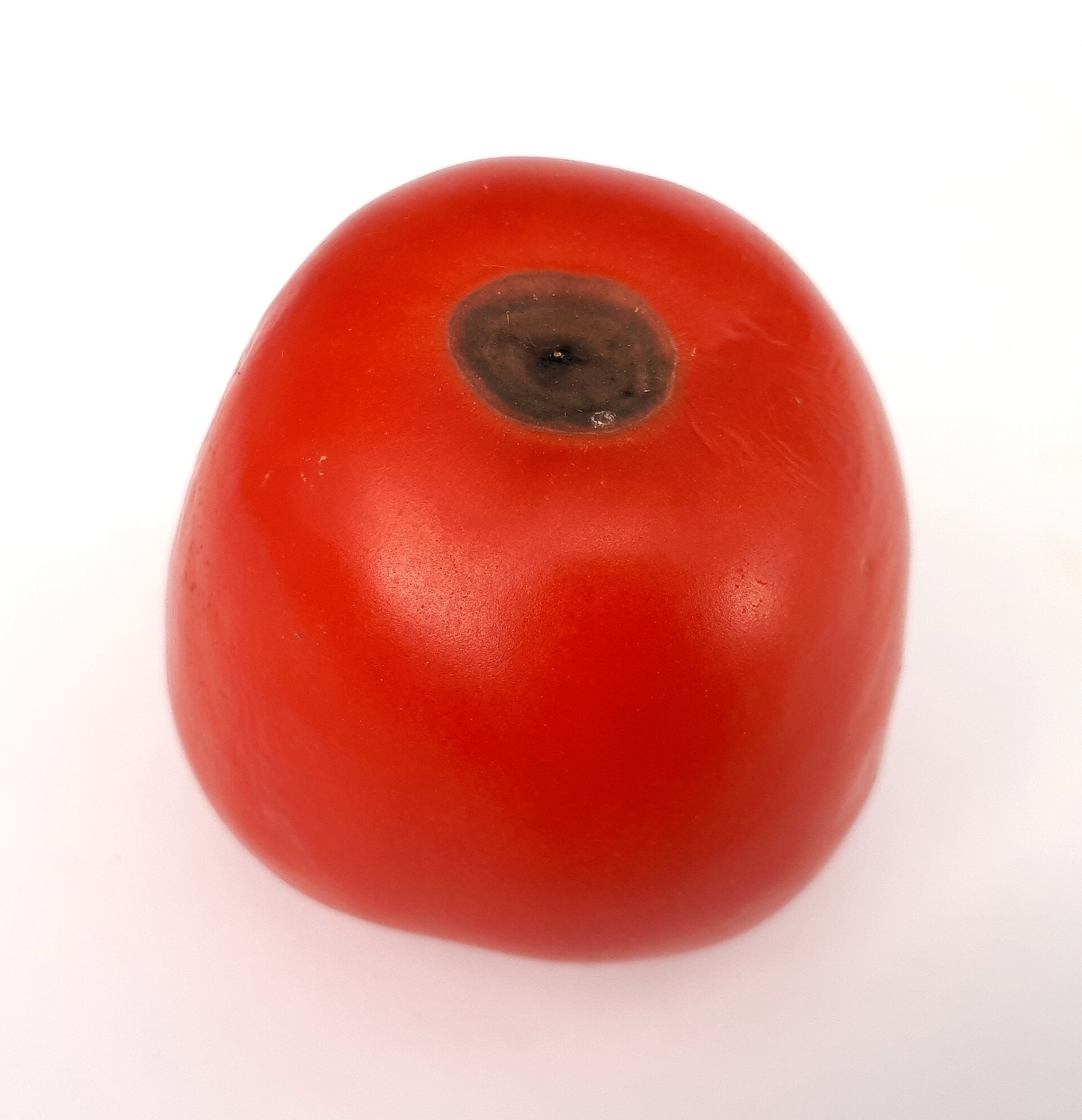
Why it happens: the calcium and water story
To prevent blossom end rot reliably you need to understand the chain of events that produces it, because every effective intervention targets one link in that chain. The story begins underground. Calcium dissolved in soil water is pulled into the roots and carried upward in the xylem, the plant's water-transport tissue, driven almost entirely by transpiration, the evaporation of water from leaves. Wherever water moves fastest and evaporates most, calcium follows. Leaves transpire heavily, so they get plenty. Fruits transpire very little, so they are perpetually at the back of the line for calcium even in a healthy plant.
Now add a fast-growing fruit. A young tomato is expanding its cells at a furious rate during the first couple of weeks after the flower drops. Those new cells all demand calcium at exactly the moment the fruit is least able to compete for it. The plant is essentially trying to build a wall while the bricks are being delivered to the wrong address. As long as water flow is smooth and steady, just enough calcium reaches the blossom end to keep up. The system runs with almost no margin, which is why anything that interrupts the flow tips it into failure.
That interruption is usually water. When soil dries out, the plant loses turgor, transpiration slows, root uptake drops, and the calcium stream to the fruit thins to a trickle right when the fruit needs it most. Then the gardener notices the wilting, drenches the bed, and the plant lurches into a growth spurt, demanding even more calcium than before from a delivery system that just spent days running on empty. The blossom end, already behind, cannot catch up, and its cells collapse. Drought, then flood, then drought again is the precise recipe for blossom end rot, and it is why container tomatoes, which dry out fast, are especially prone.
Several other factors throttle the same pipeline, which is why the disorder has so many apparent triggers. Heavy nitrogen fertilizer, especially fast-release ammonium forms, pushes lush leafy growth that out-competes the fruit for calcium and floods the plant with ammonium ions that chemically compete with calcium uptake at the root. Excess potassium and magnesium do the same by ionic competition. Salty soils and high heat both reduce water uptake. Damaged roots, whether from aggressive hoeing, transplant shock, or waterlogged soil that suffocates them, cannot draw water or calcium properly. Very acidic soil can genuinely run short of available calcium, which is the one case where soil calcium is actually the culprit.
This is also why foliar calcium sprays so often disappoint. Calcium does not move readily from a leaf into a fruit, and a fruit's waxy skin absorbs very little of what lands on it. Spraying the leaves treats the part of the plant that already has plenty of calcium and bypasses the fruit that needs it. A spray aimed directly at young fruit can offer marginal, temporary help in a pinch, but it does nothing about the underlying water swings, so the rot returns. The durable fix is always upstream, in the soil and the watering can, not on the foliage.